
What most people actually want
Most people do not want another public social network. They want a photo that disappears, sent to someone they already know: a partner, a parent, a best friend, or a small family group.
Big social apps add stories, discovery feeds, maps, and suggested people. That extra surface is useful if you want to be found. It is noise if you only want “here is my day” photos for a handful of people.
How DuoFrame works
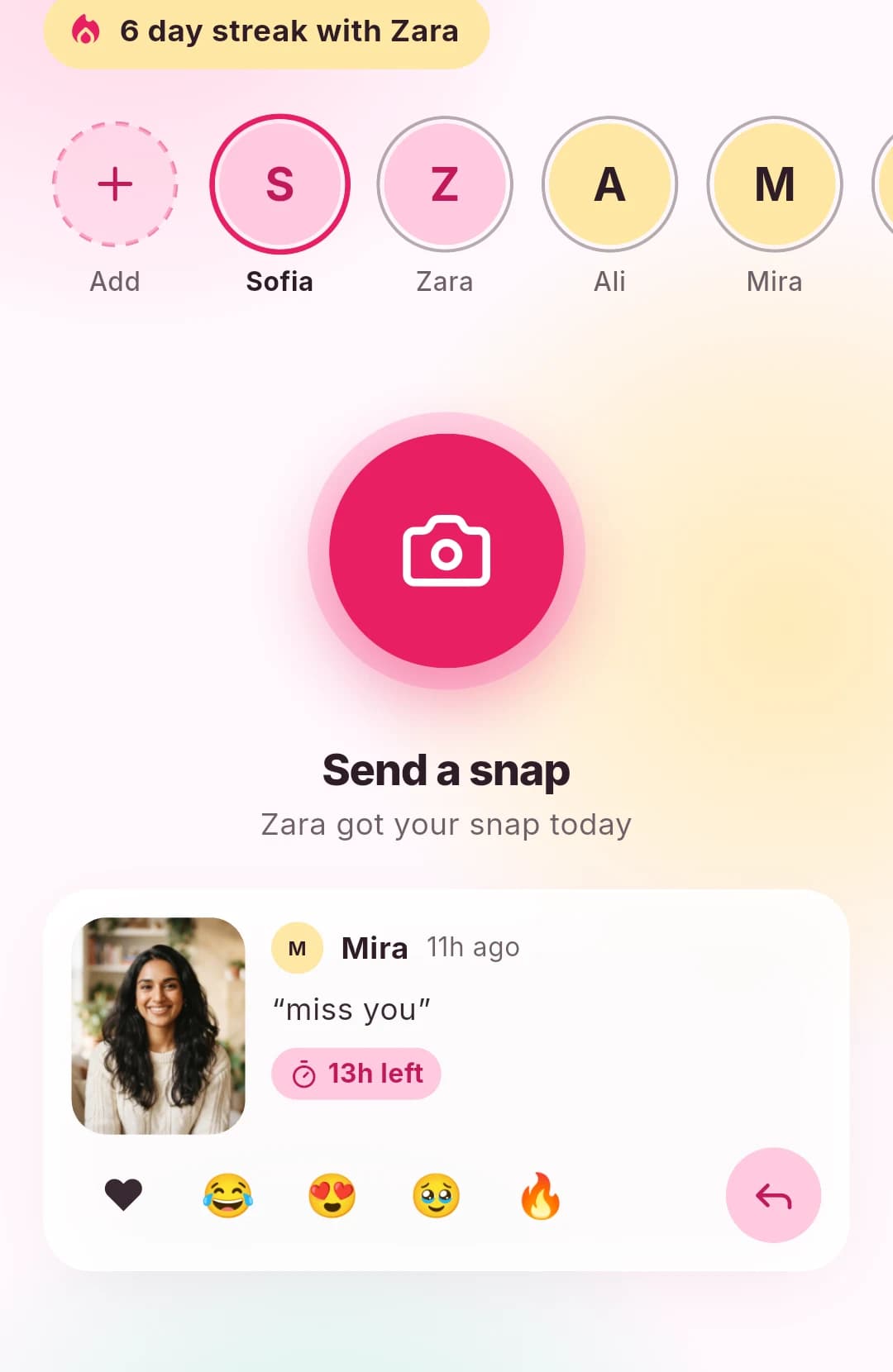
DuoFrame is a private photo-sharing app. You invite friends by email or a shareable link. You send a photo, optionally with a caption, to one person or several friends. Each snap expires 24 hours after it is sent.
Received photos can appear on a home screen widget, so the latest snap is waiting when you unlock the phone. Friends can react with an emoji. There is no public profile, no follower count, and no explore tab.
What DuoFrame leaves out on purpose
DuoFrame is smaller by design.
- No stories, discovery feed, or public search.
- No map or location sharing.
- No chat thread. A reply is another photo, or a conversation you already have elsewhere.
- No suggested people. Someone joins only if you invite them.
- No permanent in-app gallery. Keep anniversary photos in an album you choose.
When a smaller app is the better fit
Choose a private snap app when a parent wants kids’ photos on the home screen, a couple lives in different cities, or a friend group is tired of posting to a story that anyone can open.
A widget only works if the people you care about are on it, so start with the one or two people you message most.
How to try DuoFrame with one person
Start with a single friend before asking a whole group to move.
- Install DuoFrame from Google Play and create an account.
- Invite one person by email or share your invite link.
- Add the DuoFrame widget to your Android home screen.
- Send a test snap and ask them to send one back.
- Decide together whether a 24-hour photo habit fits your day.